

Talk to your advisor today about enrolling in one of these Course-based Undergraduate Research Experiences (CUREs) for Fall 2026!
*Some courses may require you to complete an application or email the instructor to enroll. See information for each course below.
Interested in Vertically Integrated Projects? Visit their webpage to apply: uavip.arizona.edu/
Check this page regularly - we update it as classes are added or changed. A complete list of CUREs developed at the University of Arizona can be found here.
Questions about CUREs? Email UndergradResearch@arizona.edu!
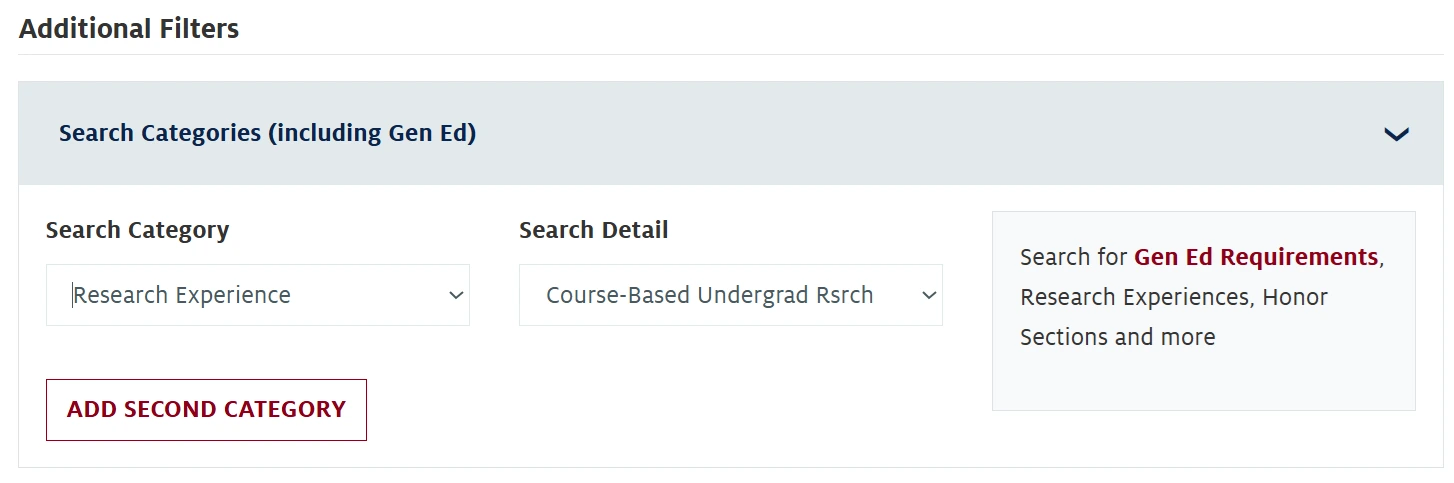
You can search for CUREs in UAccess Class Search!
- Under ‘Additional Filters’, expand the ‘Search Categories (including Gen Ed)’ section
- For ‘Search Category’, select ‘Research Experience’
- For ‘Search Detail’, select ‘Course-Based Undergrad Rsrch’
CUREs in STEM Fields
Instructor: Dr. Na Zuo
Schedule: TuTh 12:30PM - 1:45PM at Saguaro Hall, Rm 202
Credits: 3
Description: Few questions are more fundamental than how we feed the world's people. Yet, the coexistence of food insecurity and food waste begs the question: how can we feed the population efficiently, sustainably, and equitably? This course familiarizes students with the food economy and its efficiencies while identifying where gaps occur as food flows from producers to consumers. These gaps frequently lead to food insecurity with a less healthy populous, as well as food waste, an issue in more developed societies. By examining 1) the food supply chain and markets, 2) food insecurity, 3) food loss and waste along the food supply chain and 4) food policies through the lens of marginalized populations, students will gain insights into the economic forces that shape the food system. This course stimulates critical thinking and problem solving through economic, nutritional science and policy-making perspectives, which may lead to potential resolutions for those who struggle to afford and consume healthy, wholesome foods
Prerequisites: None!
Course Attributes:
Gen Ed: Tier 2 Individuals and Societies
Gen Ed: Building Connections
Engagement: Community Partnership
Engagement: Civic and Community Responsibility
Instructor: Dr. Haiquan Li
Schedule: Online
Credits: 3
Description: In this class, students will work in collaborative teams to develop and conduct a short research project on data and code reproducibility in bioinformatics. This class will provide an opportunity for collaboration between students but will also allow them to present to- and connect with local members of the data science community. Students will conduct a survey assessing the accessibility, documentation, and reproducibility of previously published bioinformatics tools. Students will also conduct a survey of the current landscape and the evolution of these practices in bioinformatics.
Prerequisites: None
Instructor: Dr. Tara Archuleta (tlarchul@arizona.edu)
Schedule: Mondays and Wednesdays 2:00pm-2:50pm
Credits: 2
Description: To introduce sophomore biochemistry students to experimental design and data interpretation. Exercises include group discussions on experimental controls, conclusions, and alternate explanations for published experiments. Students will apply what they learn to generate resources in the field of biochemical research.
Prerequisites: Biochemistry majors only, or consent of instructor
Instructor: Luke Fleck
Schedule: Online
Credits: 3
Description: This course will lay a foundation for students to understand how to process, analyze, and visualize data. Topics include data collection and integration, exploratory data analysis, statistical inference and modeling, machine learning, and data visualization. The emphasis of the course topics will be placed on integration and synthesis of concepts and their application to solving problems. Students will explore these topics using software tools.
Prerequisites: Students enrolled in fully online programs only. CYBR 342 and CYBR 320.
Instructor: Ryan Ruboyianes
Schedule: Online (7 week - first or second), Tu, Wed, Thur 8:00AM - 10:50AM, 11:00AM - 1:50PM, 2:00PM - 4:50PM, 5:00PM - 7:50PM
Credits: 1
Description: Diversity and evolution of life; structure and function of plants, animals, and organ systems; processes of micro and macroevolution, strategies and selection of different species; phylogenetics and descent.
Prequisites: ECOL 182R or concurrent registration. At least Level III placement on the Math Readiness Test. High school biology recommended.
Instructor: Dr. Bryan Black (bryanblack@arizona.edu); Dr. David Frank (davidcfrank@arizona.edu)
Schedule: TuTh 11:00AM - 12:15PM, Bryant Bannister Tree-Ring Building room 110
Credits: 3
Description: In this course, students will learn the fundamentals of the scientific research generally, and in dendrochronology specifically, by engaging in a novel, hands-on, societally-relevant research project anchored in the earth, environmental, and archeological sciences. Topics covered include the scientific method, fundamentals of dendrochronology, data visualization and basic analysis, and scientific communication. This course is intended for students from any background and with no prior experience who are interested in enhancing their science skills through a discovery-driven research experience.
Prequisites: None!
Instructor: Dr. Martha Whitaker
Schedule: TuTh 9:30AM - 10:45AM
Credits: 4
Description: This course is an introduction to main hydrologic processes, including global circulation, precipitation, evaporation and transpiration, runoff, soil moisture, infiltration, groundwater, water quality, and water resources management. Laboratory and field techniques complement lecture topics. Students will conduct at least one course-based-undergraduate research experience (CURE) and prepare a presentation for stakeholders.
Prequisites: MATH 124 or MATH 125 or MATH 122B.
Instructor: Dr. Martha Bhattacharya (marthab1@arizona.edu)
Schedule: Tuesdays 9:30-10:30. Then students are enrolled for two 50 minute laboratory sessions during the week
Credits: 4
Description: This course asks how genes altered in human sequencing datasets might alter the course of a neurodegenerative disease, Amyotrophic Lateral Sclerosis (ALS). Students test their hypotheses using a fruit fly (Drosophila) model – setting up genetic crosses, collecting behavioral data from offspring, and doing machine learning-based analysis on the high performance computing cluster. As a group, we’re hoping to find ways to prevent the loss of neurons in ALS.
To apply, please fill out the google form here: NROS 397 Fall 2026 Student Application
Instructor: Dr. Charles Wolgemuth (wolg@arizona.edu)
Schedule: Lecture MWF 9:00-9:50AM; Lab sections offered Tuesdays 11:00AM-1:50PM, 2:00-4:50PM, and 5:00-7:50PM
Credits: 4
Description: A freshman-level course in Newtonian mechanics, taught at an accelerated level; introduces freshman-level students to the statics and dynamics of point particles, rigid bodies, and fluids. Topics include vector algebra, projectile and circular motion, Newton's Laws, conservation of energy, collisions and conservation of momentum, rotational dynamics and conservation of angular momentum, statics, harmonic oscillators and pendulums, gravitation and Kepler's Laws, fluid statics and dynamics.
Prequisites: This course, Accelerated Introductory Mechanics, is meant for Astronomy, Physics, and Applied Physics majors.
CUREs in Humanities, Social Sciences, and Fine Arts
Instructor: Dr. Bryan Carter (bryancarter@arizona.edu)
Schedule: Variable
Credits: Variable
Description: Students will join in a theoretical and hands-on practical introduction to the Digital Humanities and advanced technologies used in the field (augmented reality, virtual reality, volumetric, 360 imaging, etc.). This knowledge will be applied in a real-world project with a local cultural center as students collaborate to explore how to undertake critical, embedded Digital Humanities partnerships in community settings with vulnerable populations.
Prerequisites: None
Instructor: Dr. Amy Fountain (avf@arizona.edu)
Schedule: Online
Credits: Variable
Description: Students will join a community-based language technology development project, the Coeur d’Alene Online Language Resource Center (COLRC), as an example of a community lead language technology development project that focuses on the needs of a low-resource, minoritized language community. Depending on their skills and interests, participating students will enroll for 1 to 3 credits, at a course level (299, 399, 499) appropriate to their experience, and be assigned to assist in the development and deployment process. The project supports students who wish to develop skills in linguistic analysis and language activism, along with at least one of the following technical skills: coding for frontend, backend, rest interfaces, and scripting (javascript, python); database development (postgres, graphQL); and/or natural language processing (ingest, tokenization, annotation tasks using lum.ai/odinson libraries). Interested students should have at least some familiarity with and enjoyment of coding, but need not have significant experience or expertise in these areas. Students who are members of minoritized or low resource language communities will bring particularly valuable experience and expertise to this work, but any undergraduate student is welcome to participate.
Prerequisites: None
Instructor: Dr. Jennie Gubner (jgubner@arizona.edu)
Schedule: Tu 9:30AM - 11:50AM
Credits: 3
Description: How can music promote health and wellness in our lives and communities across the lifespan? For years, ethnomusicologists have been studying music around the world as a form of healing and a vehicle for community building and identity formation. One of the most important ways ethnomusicologists do research is by learning directly with and from individuals and communities through interviews, observant participation, and thoughtful engagement in communities of practice. In this interdisciplinary, hands-on, fieldwork course, we will explore the relationship between music and health through the creation of collaborative, community-based digital storytelling projects. Working in teams, students in this course will meet with individuals from diverse backgrounds from across the Tucson area to learn about their musical preferences and practices, document their musical life stories, and work to map the musical spaces and activities that have brought and continue to bring meaning, wellness, and health to their lives. To raise awareness about how music can be used to build and strengthen healthy communities, the stories students gather will be collected and shared as a growing creative toolkit to be shared with community members and healthcare providers.
Prerequisites: None
Instructor: Dr. Brian Luce (bluce@arizona.edu)
Schedule: Mondays & Fridays 11:00-11:50AM
Credits: 4
Description: As a flute performer, we have the power to communicate a diverse array of emotions and aesthetics to all audiences. Arizona Flute Performance studies at the 4-credit level trains performers to increase their musical impact through live performances, stereo and immersive audio recordings, 2D and VR video content generation, and through the integration of kinesiological, medical, engineering, and neurological research. Students are encouraged to create integrated projects that will benefit performers in health and wellness, increase music learning effectiveness through psychoacoustic and kinesiological pedagogies, and improve listeners’ enjoyment through research on the impact of sound on human well-being at any age.
This course is open to all students. This course fulfills Music Individual Studies requirements for the Bachelor of Music and Bachelor of Arts in Music. This course may be used to fulfill credit requirements for the Minor in Music. Master class and technique seminar attendance is required while individual lessons are individually arranged directly with the professor. Successful completion is by faculty jury.
Prerequisites: Audition and permission of instructor; or successful completion of MUSI 181 or MUSI 182 by faculty jury.
Instructor: Dr. Kristy Slominski (slominski@arizona.edu)
Schedule: Tuesdays 11:00AM-12:15PM
Credits: 3
Description: This course explores diverse religious and spiritual conceptions of health in the United States and their relationships to experiences of sickness and healing. It will include a critical examination of historical and contemporary cases in which religious and spiritual views of health have interacted with healthcare systems, including cases of cooperation and conflict.
Prerequisites: Two courses from Tier One, Traditions & Cultures
Course Attributes:
Gen Ed: Diversity Emphasis
Gen Ed: Tier 2 Humanities
Gen Ed: Building Connections
Instructor: Dr. Kristy Slominski (slominski@arizona.edu)
Schedule: In-person on Tuesdays 9:30am-10:45am, the rest online!
Credits: 3
Description: This course is designed to offer tools for engaging religious and cultural diversity within healthcare settings, which includes consideration of religious patients, religious healthcare workers, faith-based healthcare institutions, and the impact of religious communities on healthcare laws and services. To develop skills for navigating intercultural differences, students will practice applying academic approaches to religion to health-related case studies.
This is a CURE course, so students will engage in online research that contributes to understandings of religious contributions to healthcare in Tucson!
Prerequisites: None
Instructors: Dr. Jennifer Kirkpatrick (kirkpatrickj@arizona.edu) and Dr. Jina Yoon (jinayoon@arizona.edu)
Schedule: TuTh 11:00AM-12:15PM
Credits: 3
Description: This course is designed for students to develop an applied understanding of social science/educational research conducted by School Psychologists related to social emotional development of school aged children. Topics covered include an introduction to current literature on behavioral, social, and emotional development for children and adolescents, with an emphasis on trauma and stress among youth from underrepresented backgrounds. Literature on resilience and positive development will also be introduced. Along with an exploration of research, the course offers an introduction to the tools necessary to engage in research including literature searches, research methods, data collection, basic data analyses. Students will learn to interpret results and apply findings to practice in schools. Through a guided research experience, students will identify a research question, analyze data, and interpret results for application to the school community. Students will learn about methods for dissemination of findings by preparing a professional poster and presenting their research findings and implications to an audience of peers and university community.
Prerequisites: None
Class Attributes - Gen Ed: Exploring Perspectives, Social Scientist
Image
Instructor: Dr. Daniel Menchik (mench@arizona.edu)
Schedule: Fully online
Credits: 3
Description: Organization of health care in the US; its impact on patients and society; health care practitioners; medical industries; policy debates.
Prerequisites: None